
Hybrid/Remote Front Office Job Trends

Front Office
UK > Work from Home

The table below looks at the prevalence of the term Front Office in remote or hybrid work. Included is a benchmarking guide to the salaries offered in vacancies that cited Front Office over the 6 months leading up to 5 June 2026, comparing them to the same period in the previous two years.

6 months to
5 Jun 2026
Same period 2025 Same period 2024
Rank 330 111 155
Rank change year-on-year -219 +44 -15
Permanent jobs citing Front Office 83 482 694
As % of all permanent jobs with remote/hybrid work options 0.43% 3.24% 2.07%
As % of the General category 0.75% 4.33% 3.39%
Number of salaries quoted 62 451 652
10th Percentile £75,000 £85,000 £75,000
25th Percentile £100,000 £100,000 £87,500
Median annual salary (50th Percentile) £135,000 £115,000 £115,000
Median % change year-on-year +17.39% - +9.52%
75th Percentile £142,500 £137,500 £146,250
90th Percentile £150,000 £150,000 £165,000
UK median annual salary £100,000 £115,000 £115,000
% change year-on-year -13.04% - +6.98%

All General Skills
Work from Home

Front Office falls under the General Skills category. For comparison with the information above, the following table provides summary statistics for all permanent job vacancies with remote or hybrid options requiring general skills.

Permanent vacancies with a requirement for general skills 11,083 11,141 20,479
As % of all permanent jobs with a WFH option 57.47% 74.95% 60.95%
Number of salaries quoted 7,223 6,123 15,128
10th Percentile £32,500 £27,750 £31,750
25th Percentile £42,873 £41,250 £41,250
Median annual salary (50th Percentile) £60,000 £60,000 £55,000
Median % change year-on-year - +9.09% -12.00%
75th Percentile £80,000 £81,250 £75,000
90th Percentile £98,750 £110,000 £95,000
UK median annual salary £55,000 £57,343 £52,500
% change year-on-year -4.09% +9.22% -12.50%

Front Office
Job Vacancy Trend for Remote/Hybrid Jobs

Historical trend showing the proportion of permanent IT job postings citing Front Office and offering remote or hybrid work options relative to all permanent IT jobs advertised.
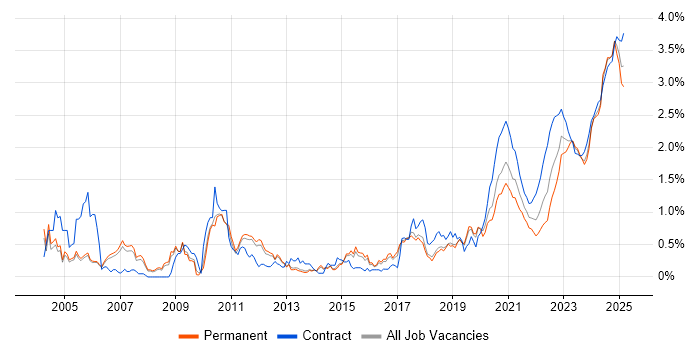
Front Office job vacancy trend for remote/hybrid jobs

Front Office
Salary Trend for Remote/Hybrid Jobs

Salary distribution trend for jobs with remote/hybrid work options citing Front Office.
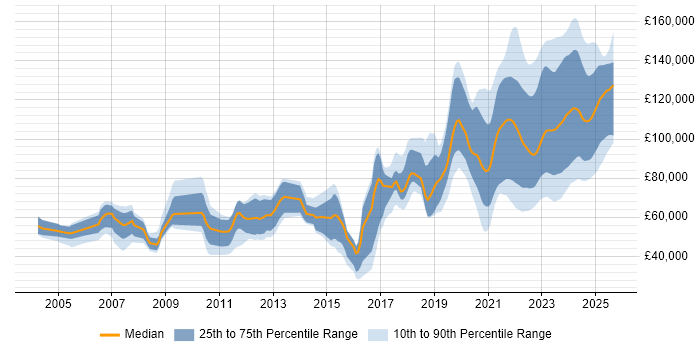
Salary distribution trend for jobs with remote/hybrid work options citing Front Office

Front Office
Salary Histogram for Remote/Hybrid Jobs

Salary distribution for jobs with remote/hybrid work options citing Front Office over the 6 months to 5 June 2026.

Front Office salary histogram for jobs with remote/hybrid work options

Front Office
Co-Occurring Skills & Capabilities in Remote/Hybrid Jobs by Category

The following tables expand on the one above by listing co-occurrences grouped by category. They cover the same employment type, locality and period, with up to 20 co-occurrences shown in each category:

Application Platforms
1 1 (1.20%) Microsoft Exchange
Applications
1 2 (2.41%) Microsoft Office
Business Applications
1 2 (2.41%) Fidessa
Cloud Services
1 45 (54.22%) AWS
2 16 (19.28%) GCP
3 12 (14.46%) Azure
4 2 (2.41%) Amazon EKS
4 2 (2.41%) Amazon Kinesis
4 2 (2.41%) AWS Lambda
4 2 (2.41%) Copilot Studio
4 2 (2.41%) GitHub
4 2 (2.41%) GitHub Actions
4 2 (2.41%) Microsoft Copilot
4 2 (2.41%) Serverless
5 1 (1.20%) Amazon Cognito
5 1 (1.20%) Amazon S3
5 1 (1.20%) Anthropic Claude
5 1 (1.20%) AWS Fargate
5 1 (1.20%) Entra ID
5 1 (1.20%) Power Platform
5 1 (1.20%) Rubrik
5 1 (1.20%) SaaS
5 1 (1.20%) Snowflake
Communications & Networking
1 2 (2.41%) TCP/IP
1 2 (2.41%) Telnet
Database & Business Intelligence
1 8 (9.64%) PostgreSQL
2 5 (6.02%) SQL Server
3 4 (4.82%) Relational Database
4 2 (2.41%) Flink
5 1 (1.20%) Data Lake
Development Applications
1 4 (4.82%) JIRA
General
1 63 (75.90%) Finance
2 21 (25.30%) Banking
3 10 (12.05%) Analytical Skills
4 8 (9.64%) Inclusion and Diversity
5 6 (7.23%) Social Skills
6 5 (6.02%) Legal
7 4 (4.82%) Financial Institution
7 4 (4.82%) Investment Banking
7 4 (4.82%) Marketing
8 1 (1.20%) Japanese Language
Job Titles
1 55 (66.27%) Developer
2 43 (51.81%) Software Engineer
3 40 (48.19%) Developer/Software Engineer
4 32 (38.55%) Lead
5 28 (33.73%) Lead Developer
5 28 (33.73%) Lead Software Developer
5 28 (33.73%) Lead Software Engineer
6 12 (14.46%) Full-Stack Engineer
6 12 (14.46%) React Developer
7 11 (13.25%) Front Office Developer
7 11 (13.25%) Full-Stack Software Engineer
7 11 (13.25%) Java Engineer
7 11 (13.25%) Java Software Engineer
8 9 (10.84%) C# Developer
8 9 (10.84%) Java Developer
9 8 (9.64%) Full-Stack Developer
9 8 (9.64%) Java Software Developer
10 7 (8.43%) Analyst
11 5 (6.02%) Python Developer
11 5 (6.02%) UI Developer
Libraries, Frameworks & Software Standards
1 44 (53.01%) React
2 41 (49.40%) Node.js
3 40 (48.19%) Redux
4 35 (42.17%) Kafka
5 32 (38.55%) GraphQL
6 8 (9.64%) AngularJS
6 8 (9.64%) Vue
7 7 (8.43%) FIX Protocol
8 3 (3.61%) REST
8 3 (3.61%) XML
9 2 (2.41%) .NET
9 2 (2.41%) Pandas
9 2 (2.41%) Sass
9 2 (2.41%) XSLT
9 2 (2.41%) ZeroMQ
10 1 (1.20%) .NET Core
10 1 (1.20%) Flask
10 1 (1.20%) LangChain
10 1 (1.20%) Microsoft Graph
10 1 (1.20%) PySpark
Miscellaneous
1 45 (54.22%) Fixed Income
2 14 (16.87%) Equities
3 12 (14.46%) Derivative
4 11 (13.25%) Hedge funds
5 5 (6.02%) Foreign Exchange (FX)
6 4 (4.82%) Algorithms
6 4 (4.82%) Analytical Mindset
7 3 (3.61%) Management Information System
8 2 (2.41%) Distributed Computing
8 2 (2.41%) Self-Motivation
9 1 (1.20%) AI Agents
9 1 (1.20%) Cloud Native
9 1 (1.20%) Credit Risk
9 1 (1.20%) Distributed Systems
9 1 (1.20%) Legacy Systems
Operating Systems
1 5 (6.02%) Linux
2 4 (4.82%) Windows
3 2 (2.41%) Windows Server
4 1 (1.20%) Unix
Processes & Methodologies
1 47 (56.63%) Agile
2 46 (55.42%) Investment Management
2 46 (55.42%) Software Engineering
3 40 (48.19%) Portfolio Management
4 34 (40.96%) Order Management
5 29 (34.94%) Full-Stack Development
6 13 (15.66%) Fintech
7 10 (12.05%) Asset Management
8 9 (10.84%) Mentoring
9 8 (9.64%) DevOps
9 8 (9.64%) Line Management
9 8 (9.64%) Problem-Solving
10 7 (8.43%) ITIL
11 6 (7.23%) CI/CD
11 6 (7.23%) Decision-Making
12 5 (6.02%) Coaching
12 5 (6.02%) Regulatory Change
13 4 (4.82%) Business Intelligence
13 4 (4.82%) Data Pipeline
13 4 (4.82%) Risk Management
Programming Languages
1 48 (57.83%) Python
2 42 (50.60%) Java
2 42 (50.60%) TypeScript
3 41 (49.40%) JavaScript
4 34 (40.96%) Go
5 20 (24.10%) SQL
6 14 (16.87%) C#
7 4 (4.82%) C++
8 2 (2.41%) C
8 2 (2.41%) PowerShell
8 2 (2.41%) Tcl
8 2 (2.41%) VBA
8 2 (2.41%) VC++
Qualifications
1 9 (10.84%) Degree
2 3 (3.61%) Computer Science Degree
3 2 (2.41%) ACCA
3 2 (2.41%) CIMA
3 2 (2.41%) Master's Degree
Quality Assurance & Compliance
1 5 (6.02%) EMIR
2 3 (3.61%) MiFID
3 1 (1.20%) Data Quality
System Software
1 4 (4.82%) Docker
Systems Management
1 5 (6.02%) Kubernetes
2 3 (3.61%) Terraform
3 2 (2.41%) Argo
Vendors
1 4 (4.82%) Microsoft
2 3 (3.61%) IBM
3 2 (2.41%) Charles River
3 2 (2.41%) Databricks
3 2 (2.41%) Oracle
3 2 (2.41%) Sybase
3 2 (2.41%) TIBCO
4 1 (1.20%) Solace