For comparison with the information above, the following table provides summary statistics for all contract IT job vacancies in Hook. Most job vacancies include a discernible job title that can be normalized. As such, the figures in the second row provide an indication of the number of contract jobs in our overall sample.
Contract vacancies in Hook with a recognized job title
6
7
17
% of contract IT jobs with a recognized job title
100.00%
70.00%
68.00%
Number of daily rates quoted
6
6
3
10th Percentile
£456
£431
£522
25th Percentile
£500
£450
£556
Median daily rate (50th Percentile)
£575
£469
£612
Median % change year-on-year
+22.67%
-23.41%
+6.43%
75th Percentile
£763
£555
£962
90th Percentile
£844
£575
£1,172
Hampshire median daily rate
£530
£550
£538
% change year-on-year
-3.64%
+2.33%
+2.38%
Number of hourly rates quoted
0
0
5
10th Percentile
-
-
£65.04
25th Percentile
-
-
-
Median hourly rate
-
-
£78.00
Median % change year-on-year
-
-
+18.18%
75th Percentile
-
-
-
90th Percentile
-
-
-
Hampshire median hourly rate
£25.00
£62.50
£49.50
% change year-on-year
-60.00%
+26.26%
+10.00%
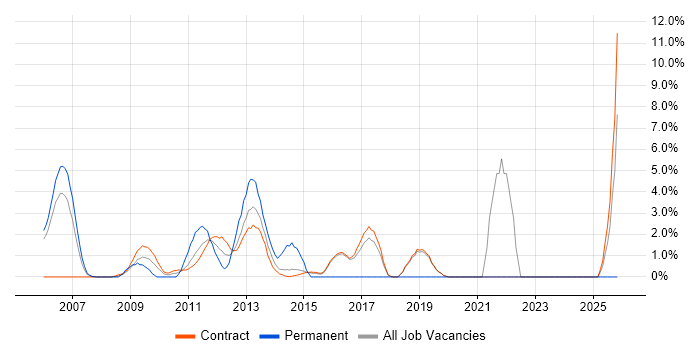
Infrastructure Architect Job Vacancy Trend in Hook
Historical trend showing the proportion of contract IT job postings featuring 'Infrastructure Architect' in the job title relative to all contract IT jobs advertised in Hook.
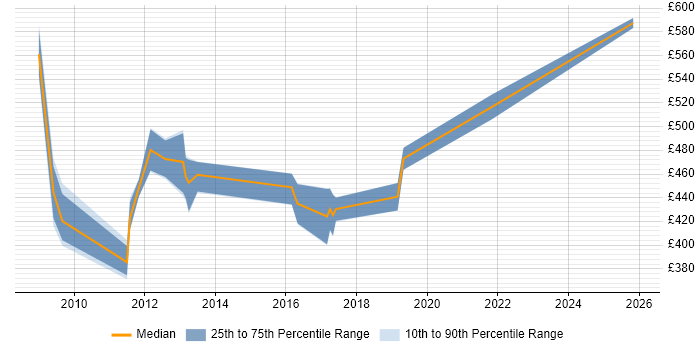
Infrastructure Architect Daily Rate Trend in Hook
Contractor daily rate distribution trend for Infrastructure Architect job vacancies in Hook.
Infrastructure Architect Skill Set Top 7 Co-Occurring Skills & Capabilities in Hook
For the 6 months to 5 December 2025, Infrastructure Architect contract job roles required the following skills and capabilities in order of popularity.
The figures indicate the absolute number of co-occurrences and as a proportion of all contract job ads across the Hook region featuring Infrastructure Architect in the job title.
Infrastructure Architect Skill Set Co-Occurring Skills & Capabilities in Hook by Category
The following tables expand on the one above by listing co-occurrences grouped by category. They cover the same employment type, locality and period, with up to 20 co-occurrences shown in each category: