Ruby Developer
Tyne and Wear > Newcastle upon Tyne
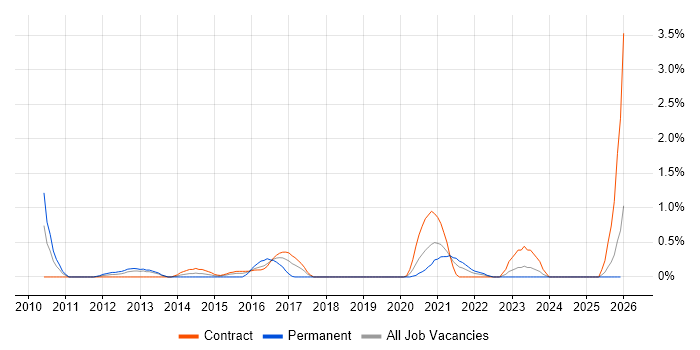
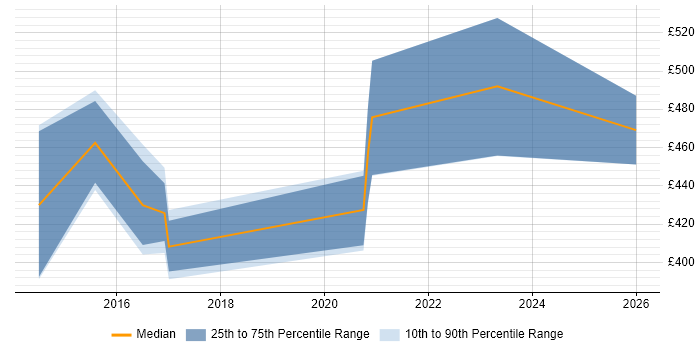
The median Ruby Developer daily rate in Newcastle upon Tyne is £450, according to job vacancies posted in the 6 months leading up to 23 January 2026.
The table below compares current contractor rates and summary statistics with the previous two years.
|
|
6 months to
23 Jan 2026 |
Same period 2025 |
Same period 2024 |
| Rank |
47 |
- |
- |
| Rank change year-on-year |
- |
- |
- |
| Contract jobs requiring a Ruby Developer |
2 |
0 |
0 |
| As % of all contract jobs in Newcastle upon Tyne |
0.53% |
- |
- |
| As % of the Job Titles category |
0.54% |
- |
- |
| Number of daily rates quoted |
2 |
0 |
0 |
| Median daily rate (50th Percentile) |
£450 |
- |
- |
| Tyne and Wear median daily rate |
£450 |
- |
- |
For comparison with the information above, the following table provides summary statistics for all contract IT job vacancies in Newcastle upon Tyne. Most job vacancies include a discernible job title that can be normalized. As such, the figures in the second row provide an indication of the number of contract jobs in our overall sample.
| Contract vacancies in Newcastle upon Tyne with a recognized job title |
369 |
187 |
181 |
| % of contract IT jobs with a recognized job title |
97.11% |
87.79% |
92.82% |
| Number of daily rates quoted |
259 |
115 |
106 |
| 10th Percentile |
£163 |
£216 |
£225 |
| 25th Percentile |
£348 |
£338 |
£378 |
| Median daily rate (50th Percentile) |
£438 |
£450 |
£490 |
| Median % change year-on-year |
-2.78% |
-8.16% |
-10.91% |
| 75th Percentile |
£513 |
£588 |
£588 |
| 90th Percentile |
£575 |
£650 |
£718 |
| Tyne and Wear median daily rate |
£438 |
£450 |
£476 |
| % change year-on-year |
-2.78% |
-5.46% |
-13.45% |
| Number of hourly rates quoted |
17 |
3 |
19 |
| 10th Percentile |
£17.88 |
£14.70 |
£12.26 |
| 25th Percentile |
£26.25 |
£14.72 |
£15.88 |
| Median hourly rate |
£52.50 |
£16.50 |
£47.50 |
| Median % change year-on-year |
+218.18% |
-65.26% |
+171.43% |
| 75th Percentile |
£55.00 |
£33.50 |
£55.00 |
| 90th Percentile |
£60.00 |
£42.65 |
£68.75 |
| Tyne and Wear median hourly rate |
£48.00 |
£18.75 |
£17.50 |
| % change year-on-year |
+156.00% |
+7.14% |
- |