Google Workspace (formerly G Suite, Google Apps) East Sussex> Brighton
The table below provides summary statistics and salary benchmarking for jobs advertised in Brighton requiring Google Workspace skills. It covers permanent job vacancies from the 6 months leading up to 2 December 2025, with comparisons to the same periods in the previous two years.
Google Workspace falls under the Cloud Services category. For comparison with the information above, the following table provides summary statistics for all permanent job vacancies requiring cloud computing skills in Brighton.
Permanent vacancies with a requirement for cloud computing skills
96
193
177
As % of all permanent jobs advertised in Brighton
40.17%
52.16%
47.71%
Number of salaries quoted
81
129
166
10th Percentile
£30,000
£45,000
£29,250
25th Percentile
£38,750
£50,000
£45,194
Median annual salary (50th Percentile)
£58,750
£60,000
£60,000
Median % change year-on-year
-2.08%
-
-
75th Percentile
£87,500
£90,000
£76,250
90th Percentile
£118,750
£95,000
£80,000
East Sussex median annual salary
£60,000
£60,000
£60,000
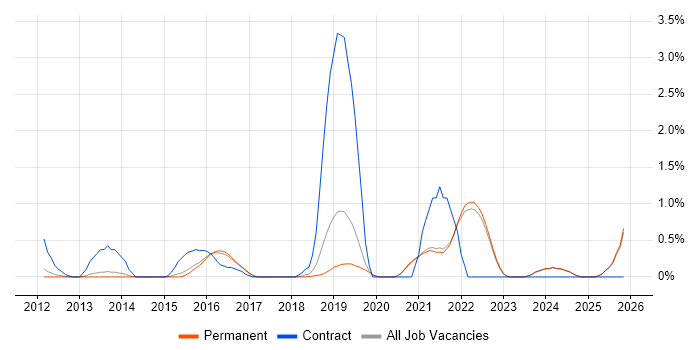
Google Workspace Job Vacancy Trend in Brighton
Historical trend showing the proportion of permanent IT job postings citing Google Workspace relative to all permanent IT jobs advertised in Brighton.
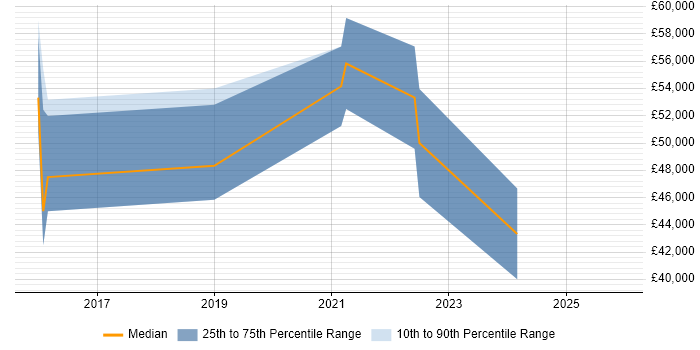
Google Workspace Salary Trend in Brighton
Salary distribution trend for jobs in Brighton citing Google Workspace.
Google Workspace Top 4 Co-Occurring Skills & Capabilities in Brighton
For the 6 months to 2 December 2025, job vacancies citing Google Workspace also mentioned the following skills and capabilities in order of popularity.
The figures indicate the absolute number of co-occurrences and as a proportion of all permanent job ads across the Brighton region with a requirement for Google Workspace.
Google Workspace Co-Occurring Skills & Capabilities in Brighton by Category
The following tables expand on the one above by listing co-occurrences grouped by category. They cover the same employment type, locality and period, with up to 20 co-occurrences shown in each category: