Cost Optimization
Cheshire > Warrington
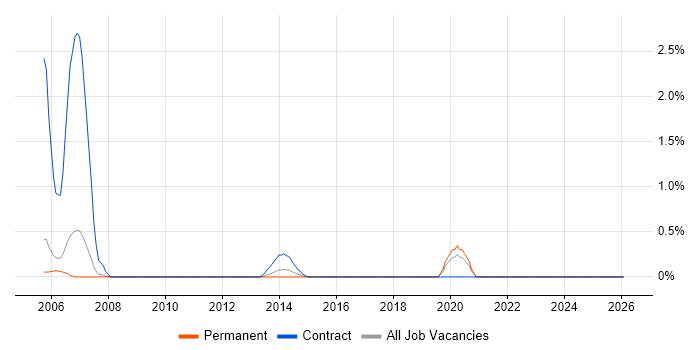
The table below provides summary statistics and salary benchmarking for jobs advertised in Warrington requiring Cost Optimisation skills. It covers permanent job vacancies from the 6 months leading up to 12 March 2026, with comparisons to the same periods in the previous two years.
|
|
6 months to
12 Mar 2026 |
Same period 2025 |
Same period 2024 |
| Rank |
38 |
- |
- |
| Rank change year-on-year |
- |
- |
- |
| Permanent jobs citing Cost Optimisation |
1 |
0 |
0 |
| As % of all permanent jobs in Warrington |
0.26% |
- |
- |
| As % of the Processes & Methodologies category |
0.34% |
- |
- |
| Number of salaries quoted |
1 |
0 |
0 |
| 10th Percentile |
- |
- |
- |
| 25th Percentile |
£66,250 |
- |
- |
| Median annual salary (50th Percentile) |
£67,500 |
- |
- |
| 75th Percentile |
£68,750 |
- |
- |
| 90th Percentile |
- |
- |
- |
| Cheshire median annual salary |
£65,000 |
- |
- |
Cost Optimisation falls under the Processes and Methodologies category. For comparison with the information above, the following table provides summary statistics for all permanent job vacancies requiring process or methodology skills in Warrington.
| Permanent vacancies with a requirement for process or methodology skills |
297 |
130 |
327 |
| As % of all permanent jobs advertised in Warrington |
76.15% |
87.25% |
92.37% |
| Number of salaries quoted |
149 |
66 |
231 |
| 10th Percentile |
£27,900 |
£31,750 |
£24,807 |
| 25th Percentile |
£30,000 |
£32,500 |
£32,500 |
| Median annual salary (50th Percentile) |
£48,979 |
£47,500 |
£47,500 |
| Median % change year-on-year |
+3.11% |
- |
+21.79% |
| 75th Percentile |
£60,000 |
£60,000 |
£62,500 |
| 90th Percentile |
£65,500 |
£79,000 |
£78,500 |
| Cheshire median annual salary |
£45,000 |
£48,306 |
£47,500 |
| % change year-on-year |
-6.84% |
+1.70% |
- |