
Problem-Solving Job Trends in Brighton

Problem Solving
East Sussex > Brighton

The table below provides summary statistics and salary benchmarking for jobs advertised in Brighton requiring Problem-Solving skills. It covers permanent job vacancies from the 6 months leading up to 5 January 2026, with comparisons to the same periods in the previous two years.

6 months to
5 Jan 2026
Same period 2025 Same period 2024
Rank 6 6 20
Rank change year-on-year 0 +14 -7
Permanent jobs citing Problem-Solving 46 52 35
As % of all permanent jobs in Brighton 15.65% 16.61% 11.04%
As % of the Processes & Methodologies category 21.20% 20.23% 12.24%
Number of salaries quoted 40 32 30
10th Percentile £30,000 £30,000 £30,260
25th Percentile £43,250 £41,250 £43,750
Median annual salary (50th Percentile) £56,500 £50,000 £58,004
Median % change year-on-year +13.00% -13.80% +1.20%
75th Percentile £80,000 £79,063 £72,813
90th Percentile £87,500 £85,000 £80,000
East Sussex median annual salary £55,000 £50,000 £52,472
% change year-on-year +10.00% -4.71% -8.45%

All Process & Methodology Skills
Brighton

Problem-Solving falls under the Processes and Methodologies category. For comparison with the information above, the following table provides summary statistics for all permanent job vacancies requiring process or methodology skills in Brighton.

Permanent vacancies with a requirement for process or methodology skills 217 257 286
As % of all permanent jobs advertised in Brighton 73.81% 82.11% 90.22%
Number of salaries quoted 170 169 266
10th Percentile £38,750 £41,250 £31,006
25th Percentile £45,000 £47,813 £43,000
Median annual salary (50th Percentile) £60,000 £60,000 £60,000
75th Percentile £76,875 £75,000 £70,000
90th Percentile £87,500 £88,250 £78,125
East Sussex median annual salary £60,000 £60,000 £57,500
% change year-on-year - +4.35% -4.17%

Problem-Solving
Job Vacancy Trend in Brighton

Historical trend showing the proportion of permanent IT job postings citing Problem-Solving relative to all permanent IT jobs advertised in Brighton.
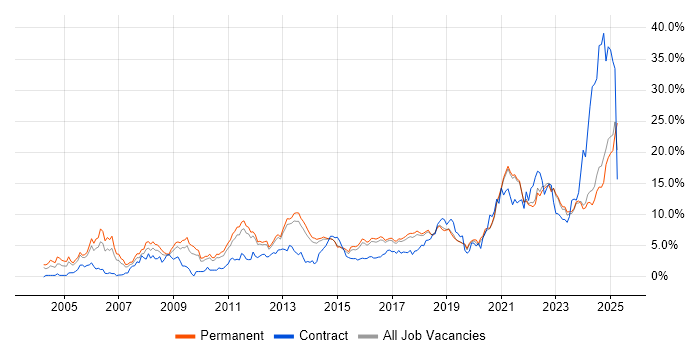
Problem-Solving job vacancy trend in Brighton

Problem-Solving
Salary Trend in Brighton

Salary distribution trend for jobs in Brighton citing Problem-Solving.
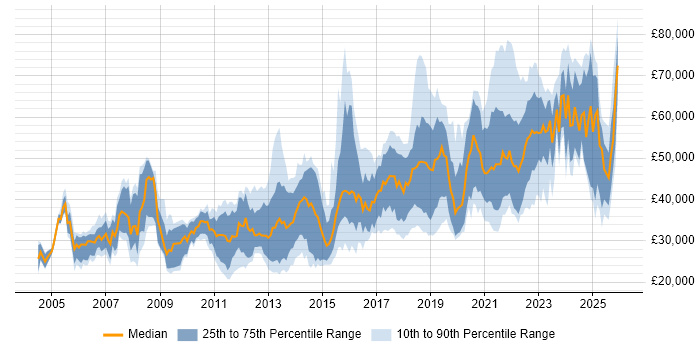
Salary distribution trend for jobs in Brighton citing Problem-Solving

Problem-Solving
Salary Histogram in Brighton

Salary distribution for jobs citing Problem-Solving in Brighton over the 6 months to 5 January 2026.

Salary histogram for Problem-Solving in Brighton

Problem-Solving
Co-Occurring Skills & Capabilities in Brighton by Category

The following tables expand on the one above by listing co-occurrences grouped by category. They cover the same employment type, locality and period, with up to 20 co-occurrences shown in each category:

Application Platforms
1 2 (4.35%) IIS
Cloud Services
1 14 (30.43%) Azure
2 10 (21.74%) Azure Synapse Analytics
3 8 (17.39%) Stripe
4 6 (13.04%) SaaS
5 4 (8.70%) GCP
5 4 (8.70%) GitHub
6 2 (4.35%) AWS
6 2 (4.35%) Azure DevOps
6 2 (4.35%) GitHub Actions
6 2 (4.35%) Google Docs
6 2 (4.35%) Google Drive
6 2 (4.35%) Google Sheets
7 1 (2.17%) Azure Data Factory
7 1 (2.17%) Power Platform
Database & Business Intelligence
1 10 (21.74%) Data Warehouse
2 6 (13.04%) Relational Database
3 2 (4.35%) GIS
3 2 (4.35%) NoSQL
3 2 (4.35%) SQL Server
4 1 (2.17%) Azure SQL Database
4 1 (2.17%) Data Lake
4 1 (2.17%) Power BI
Development Applications
1 6 (13.04%) JIRA
2 2 (4.35%) Git
2 2 (4.35%) Jenkins
General
1 39 (84.78%) Social Skills
2 17 (36.96%) Analytical Skills
3 2 (4.35%) Finance
3 2 (4.35%) Public Sector
Job Titles
1 9 (19.57%) Architect
1 9 (19.57%) Azure Architect
1 9 (19.57%) Azure Data Architect
1 9 (19.57%) Data Architect
1 9 (19.57%) Senior
2 8 (17.39%) Developer
3 7 (15.22%) Product Manager
4 6 (13.04%) PHP Software Engineer
4 6 (13.04%) Senior Software Engineer
4 6 (13.04%) Software Engineer
4 6 (13.04%) Technical Support
5 4 (8.70%) Integration Developer
5 4 (8.70%) PHP Developer
6 3 (6.52%) Full-Stack Engineer
6 3 (6.52%) Senior Full-Stack Engineer
7 2 (4.35%) Azure DevOps Engineer
7 2 (4.35%) Azure Engineer
7 2 (4.35%) DevOps Engineer
7 2 (4.35%) IAM Developer
7 2 (4.35%) PHP Laravel Developer
Libraries, Frameworks & Software Standards
1 10 (21.74%) React
2 8 (17.39%) Laravel
3 4 (8.70%) CSS
3 4 (8.70%) HTML
4 2 (4.35%) .NET
4 2 (4.35%) Ajax
4 2 (4.35%) Node.js
4 2 (4.35%) Web Services
Miscellaneous
1 8 (17.39%) Legacy Systems
2 7 (15.22%) Product Ownership
3 6 (13.04%) Onboarding
4 4 (8.70%) Analytical Mindset
5 3 (6.52%) Self-Motivation
6 2 (4.35%) Management Information System
Operating Systems
1 2 (4.35%) Windows
Processes & Methodologies
1 12 (26.09%) Continuous Improvement
2 11 (23.91%) Agile
3 10 (21.74%) E-Commerce
3 10 (21.74%) ETL
3 10 (21.74%) Stakeholder Management
4 9 (19.57%) Customer Service
4 9 (19.57%) Data Governance
4 9 (19.57%) Data Modelling
4 9 (19.57%) Data Security
4 9 (19.57%) Performance Tuning
4 9 (19.57%) Technical Leadership
4 9 (19.57%) User Experience
5 8 (17.39%) Scrum
6 7 (15.22%) Continuous Delivery
6 7 (15.22%) Performance Measurement
6 7 (15.22%) Product Backlog
6 7 (15.22%) Product Roadmap
6 7 (15.22%) Roadmaps
6 7 (15.22%) Strategic Thinking
7 6 (13.04%) Case Management
Programming Languages
1 21 (45.65%) SQL
2 18 (39.13%) Python
3 14 (30.43%) JavaScript
4 10 (21.74%) PHP
5 4 (8.70%) PowerShell
6 2 (4.35%) Go
6 2 (4.35%) TypeScript
Qualifications
1 2 (4.35%) Computer Science Degree
1 2 (4.35%) Degree
2 1 (2.17%) DBS Check
2 1 (2.17%) Microsoft Certification
Quality Assurance & Compliance
1 9 (19.57%) Data Quality
2 7 (15.22%) QA
System Software
1 2 (4.35%) Docker
Vendors
1 10 (21.74%) Databricks
2 8 (17.39%) HubSpot
3 6 (13.04%) Zoho
4 5 (10.87%) Microsoft
5 2 (4.35%) Google