
Azure Data Factory Job Trends in Edinburgh

Microsoft Azure Data Factory
Scotland > Edinburgh

The table below provides summary statistics and salary benchmarking for jobs advertised in Edinburgh requiring Azure Data Factory skills. It covers permanent job vacancies from the 6 months leading up to 15 January 2026, with comparisons to the same periods in the previous two years.

6 months to
15 Jan 2026
Same period 2025 Same period 2024
Rank 56 91 -
Rank change year-on-year +35 - -
Permanent jobs citing Azure Data Factory 48 6 0
As % of all permanent jobs in Edinburgh 4.50% 0.54% -
As % of the Cloud Services category 9.88% 1.25% -
Number of salaries quoted 2 5 0
10th Percentile - £43,500 -
25th Percentile £86,250 £45,000 -
Median annual salary (50th Percentile) £87,500 £57,500 -
Median % change year-on-year +52.17% - -
75th Percentile £88,750 £106,250 -
90th Percentile - - -
Scotland median annual salary £87,500 £52,500 £55,000
% change year-on-year +66.67% -4.55% +7.32%

All Cloud Computing Skills
Edinburgh

Azure Data Factory falls under the Cloud Services category. For comparison with the information above, the following table provides summary statistics for all permanent job vacancies requiring cloud computing skills in Edinburgh.

Permanent vacancies with a requirement for cloud computing skills 486 480 500
As % of all permanent jobs advertised in Edinburgh 45.55% 43.36% 47.71%
Number of salaries quoted 153 210 412
10th Percentile £25,750 £37,375 £37,500
25th Percentile £28,250 £47,298 £46,306
Median annual salary (50th Percentile) £42,500 £61,500 £63,750
Median % change year-on-year -30.89% -3.53% +7.10%
75th Percentile £75,000 £77,500 £75,000
90th Percentile £90,000 £93,778 £92,500
Scotland median annual salary £45,000 £55,000 £55,000
% change year-on-year -18.18% - -

Azure Data Factory
Job Vacancy Trend in Edinburgh

Historical trend showing the proportion of permanent IT job postings citing Azure Data Factory relative to all permanent IT jobs advertised in Edinburgh.
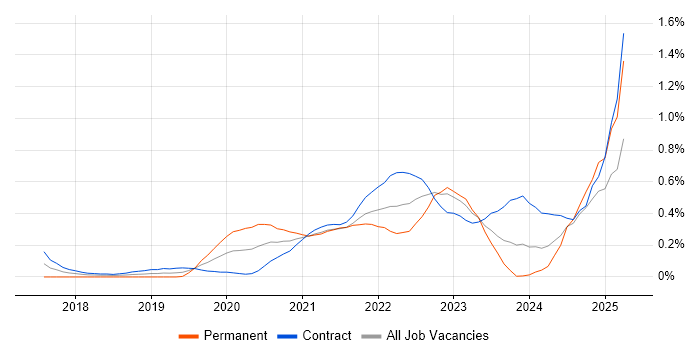
Azure Data Factory job vacancy trend in Edinburgh

Azure Data Factory
Salary Trend in Edinburgh

Salary distribution trend for jobs in Edinburgh citing Azure Data Factory.
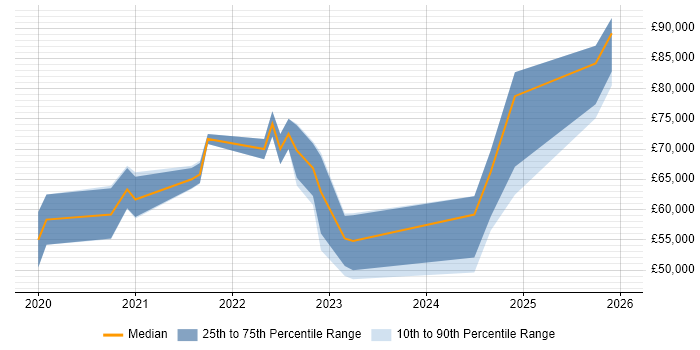
Salary distribution trend for jobs in Edinburgh citing Azure Data Factory

Azure Data Factory
Co-Occurring Skills & Capabilities in Edinburgh by Category

The following tables expand on the one above by listing co-occurrences grouped by category. They cover the same employment type, locality and period, with up to 20 co-occurrences shown in each category:

Business Applications
1 4 (8.33%) Markit EDM
Cloud Services
1 48 (100.00%) Azure
2 33 (68.75%) Azure DevOps
3 32 (66.67%) GitHub
4 21 (43.75%) Snowflake
5 14 (29.17%) Azure Event Grid
5 14 (29.17%) Azure Logic Apps
5 14 (29.17%) Azure Monitor
5 14 (29.17%) Azure Service Bus
5 14 (29.17%) dbt
5 14 (29.17%) GitHub Actions
5 14 (29.17%) GitHub Copilot
6 11 (22.92%) Power Platform
7 8 (16.67%) Azure Key Vault
8 7 (14.58%) Azure Synapse Analytics
8 7 (14.58%) Power Automate
9 4 (8.33%) Azure App Service
10 2 (4.17%) Azure Stack
Communications & Networking
1 4 (8.33%) DNS
1 4 (8.33%) Firewall
1 4 (8.33%) VPN
Database & Business Intelligence
1 14 (29.17%) Data Warehouse
2 11 (22.92%) Power BI
3 9 (18.75%) Metadata
4 7 (14.58%) Data Lake
5 2 (4.17%) Data Vault
5 2 (4.17%) Snowflake Schema
General
1 46 (95.83%) Finance
2 11 (22.92%) Analytical Skills
3 9 (18.75%) Social Skills
Job Titles
1 12 (25.00%) Azure Engineer
1 12 (25.00%) Senior
2 11 (22.92%) Applications Engineer
3 10 (20.83%) Integration Engineer
4 4 (8.33%) Applications Support
4 4 (8.33%) Applications Support Engineer
4 4 (8.33%) Azure Infrastructure Engineer
4 4 (8.33%) Cloud Engineer
4 4 (8.33%) Cloud Infrastructure Engineer
4 4 (8.33%) Infrastructure Engineer
4 4 (8.33%) Senior Cloud Engineer
4 4 (8.33%) Senior Infrastructure Engineer
4 4 (8.33%) Support Engineer
5 2 (4.17%) Data Engineer
5 2 (4.17%) Data Modeller
5 2 (4.17%) Lead
5 2 (4.17%) Lead Data Engineer
Libraries, Frameworks & Software Standards
1 14 (29.17%) JSON
1 14 (29.17%) OAuth
1 14 (29.17%) OAuth2
1 14 (29.17%) RESTful
2 8 (16.67%) YAML
Miscellaneous
1 11 (22.92%) Cloud Native
2 7 (14.58%) Low-Code
2 7 (14.58%) Self-Motivation
Operating Systems
1 4 (8.33%) VMS
1 4 (8.33%) Windows
Processes & Methodologies
1 46 (95.83%) Asset Management
1 46 (95.83%) Coaching
2 44 (91.67%) CI/CD
2 44 (91.67%) DevOps
3 29 (60.42%) Data Pipeline
4 28 (58.33%) Data Integration
4 28 (58.33%) Test Automation
5 26 (54.17%) Agile
5 26 (54.17%) Infrastructure as Code
6 25 (52.08%) Analytics
7 23 (47.92%) Data Modelling
8 22 (45.83%) Continuous Improvement
8 22 (45.83%) RBAC
9 21 (43.75%) Observability
10 18 (37.50%) ETL
10 18 (37.50%) Root Cause Analysis
11 14 (29.17%) AI
11 14 (29.17%) Deployment Automation
11 14 (29.17%) Identity Management
11 14 (29.17%) Integration Patterns
Programming Languages
1 32 (66.67%) SQL
2 28 (58.33%) Python
3 18 (37.50%) Bicep
4 16 (33.33%) PowerShell
5 7 (14.58%) T-SQL
Quality Assurance & Compliance
1 14 (29.17%) GDPR
2 11 (22.92%) Data Quality
3 8 (16.67%) Accessibility
System Software
1 4 (8.33%) Active Directory
1 4 (8.33%) Docker
Systems Management
1 26 (54.17%) Terraform
2 4 (8.33%) Kubernetes
Vendors
1 18 (37.50%) Ab Initio
2 16 (33.33%) Microsoft
3 7 (14.58%) Databricks
4 4 (8.33%) IBM