
Hybrid/Remote Oracle EBS Job Trends

Oracle E-Business Suite (OEBS)
UK > Work from Home

The table below provides summary statistics and salary benchmarking for remote or hybrid work requiring Oracle EBS skills. It covers permanent job vacancies from the 6 months leading up to 13 August 2026, with comparisons to the same periods in the previous two years.

6 months to
13 Aug 2026
Same period 2025 Same period 2024
Rank 405 382 466
Rank change year-on-year -23 +84 +57
Permanent jobs citing Oracle EBS 38 44 42
As % of all permanent jobs with remote/hybrid work options 0.17% 0.26% 0.17%
As % of the Business Applications category 3.69% 4.40% 2.50%
Number of salaries quoted 18 44 12
10th Percentile £52,500 £25,813 £58,056
25th Percentile £56,625 £47,500 £59,514
Median annual salary (50th Percentile) £78,319 £62,500 £72,500
Median % change year-on-year +25.31% -13.79% +41.46%
75th Percentile £83,750 £83,750 £91,250
90th Percentile - £88,500 -
UK median annual salary £62,500 £62,500 £55,500
% change year-on-year - +12.61% -11.20%

All Business Application Skills
Work from Home

Oracle EBS falls under the Business Applications category. For comparison with the information above, the following table provides summary statistics for all permanent job vacancies with remote or hybrid options requiring business application skills.

Permanent vacancies with a requirement for business application skills 1,030 1,000 1,682
As % of all permanent jobs with a WFH option 4.53% 6.02% 6.76%
Number of salaries quoted 612 748 885
10th Percentile £34,325 £33,750 £31,250
25th Percentile £43,000 £41,250 £41,000
Median annual salary (50th Percentile) £60,000 £60,000 £55,000
Median % change year-on-year - +9.09% -8.33%
75th Percentile £80,000 £80,000 £78,458
90th Percentile £115,000 £102,500 £95,000
UK median annual salary £62,500 £57,500 £60,000
% change year-on-year +8.70% -4.17% -

Oracle EBS
Job Vacancy Trend for Remote/Hybrid Jobs

Historical trend showing the proportion of permanent IT job postings citing Oracle EBS and offering remote or hybrid work options relative to all permanent IT jobs advertised.
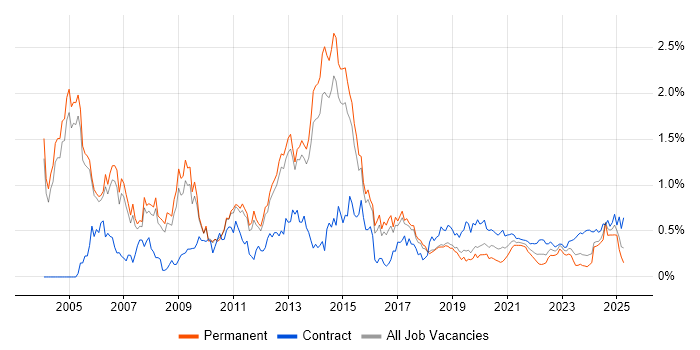
Oracle EBS job vacancy trend for remote/hybrid jobs

Oracle EBS
Salary Trend for Remote/Hybrid Jobs

Salary distribution trend for jobs with remote/hybrid work options citing Oracle EBS.
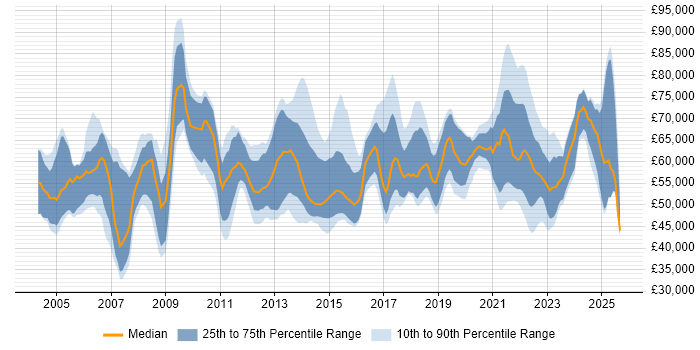
Salary distribution trend for jobs with remote/hybrid work options citing Oracle EBS

Oracle EBS
Salary Histogram for Remote/Hybrid Jobs

Salary distribution for jobs with remote/hybrid work options citing Oracle EBS over the 6 months to 13 August 2026.

Oracle EBS salary histogram for jobs with remote/hybrid work options

Oracle EBS
Co-Occurring Skills & Capabilities in Remote/Hybrid Jobs by Category

The following tables expand on the one above by listing co-occurrences grouped by category. They cover the same employment type, locality and period, with up to 20 co-occurrences shown in each category:

Application Platforms
1 5 (13.16%) Oracle SOA Suite
2 1 (2.63%) Oracle Workflow
Business Applications
1 10 (26.32%) Oracle EBS R12
2 9 (23.68%) Oracle Payables
2 9 (23.68%) Oracle Receivables
3 7 (18.42%) Oracle Assets
3 7 (18.42%) Oracle ERP
4 6 (15.79%) Oracle Cash Management
5 5 (13.16%) Oracle Applications
6 4 (10.53%) Oracle General Ledger
7 2 (5.26%) Workday HCM
8 1 (2.63%) Oracle Financials
8 1 (2.63%) Oracle iProcurement
8 1 (2.63%) Oracle Procure-to-Pay
8 1 (2.63%) SAP S/4HANA
Cloud Services
1 6 (15.79%) AWS
2 5 (13.16%) OCI
3 4 (10.53%) GitHub
3 4 (10.53%) PaaS
4 3 (7.89%) Oracle CX
4 3 (7.89%) SaaS
5 2 (5.26%) Azure
Database & Business Intelligence
1 9 (23.68%) Oracle Reports
2 5 (13.16%) Oracle Database
3 4 (10.53%) Oracle BI Publisher
4 2 (5.26%) Oracle Discoverer
4 2 (5.26%) RDBMS
4 2 (5.26%) Relational Database
Development Applications
1 7 (18.42%) Oracle Forms
2 1 (2.63%) Git
General
1 22 (57.89%) Social Skills
2 21 (55.26%) Finance
3 8 (21.05%) General Ledger
4 7 (18.42%) Analytical Skills
5 6 (15.79%) Retail
6 4 (10.53%) Banking
6 4 (10.53%) Legal
7 3 (7.89%) Public Sector
8 1 (2.63%) Influencing Skills
8 1 (2.63%) Law
8 1 (2.63%) Presentation Skills
Job Titles
1 11 (28.95%) Consultant
2 10 (26.32%) Oracle Consultant
3 8 (21.05%) Oracle Technical Consultant
3 8 (21.05%) Technical Consultant
4 6 (15.79%) Finance Manager
4 6 (15.79%) Finance Systems Manager
4 6 (15.79%) Systems Manager
5 5 (13.16%) Lead
6 4 (10.53%) Applications Manager
6 4 (10.53%) Architect
6 4 (10.53%) Product Owner
7 3 (7.89%) Analyst
7 3 (7.89%) Data Analyst
7 3 (7.89%) Data Migration Analyst
7 3 (7.89%) Developer
7 3 (7.89%) ERP Consultant
7 3 (7.89%) Lead Architect
7 3 (7.89%) Oracle Analyst
7 3 (7.89%) Oracle Developer
7 3 (7.89%) Senior
Libraries, Frameworks & Software Standards
1 17 (44.74%) Oracle Fusion
2 2 (5.26%) REST
Miscellaneous
1 7 (18.42%) Enterprise Software
2 4 (10.53%) Data Structures
2 4 (10.53%) Product Ownership
3 3 (7.89%) Blog
3 3 (7.89%) e-Learning
3 3 (7.89%) Management Information System
3 3 (7.89%) Public Cloud
4 1 (2.63%) Cloud Native
4 1 (2.63%) Distributed Systems
Operating Systems
1 3 (7.89%) Windows
2 1 (2.63%) Unix
Processes & Methodologies
1 28 (73.68%) ERP
2 14 (36.84%) Problem-Solving
3 9 (23.68%) Migration
4 8 (21.05%) Accounts Payable
4 8 (21.05%) Accounts Receivable
4 8 (21.05%) Continuous Improvement
5 7 (18.42%) Agile
5 7 (18.42%) Mentoring
5 7 (18.42%) Stakeholder Management
6 6 (15.79%) Business Intelligence
6 6 (15.79%) Cash Management
6 6 (15.79%) Project Management
6 6 (15.79%) Stakeholder Engagement
6 6 (15.79%) Technical Leadership
7 5 (13.16%) SOA
8 4 (10.53%) Data Migration
8 4 (10.53%) Domain-Driven Design
8 4 (10.53%) Software Engineering
8 4 (10.53%) TDD
8 4 (10.53%) User Stories
Programming Languages
1 14 (36.84%) SQL
2 10 (26.32%) PL/SQL
3 4 (10.53%) Java
3 4 (10.53%) Python
3 4 (10.53%) Ruby
Qualifications
1 5 (13.16%) SC Cleared
1 5 (13.16%) Security Cleared
2 3 (7.89%) Oracle Certification
3 2 (5.26%) Degree
4 1 (2.63%) CISA
4 1 (2.63%) ITIL Certification
Quality Assurance & Compliance
1 3 (7.89%) Data Quality
2 2 (5.26%) SLA
3 1 (2.63%) ISAE 3402
3 1 (2.63%) ITGC
System Software
1 1 (2.63%) Active Directory
Vendors
1 38 (100.00%) Oracle
2 3 (7.89%) Infor
3 2 (5.26%) Microsoft
3 2 (5.26%) Workday
4 1 (2.63%) SAP