Hybrid/Remote Azure Software Engineer Job Trends

Software Engineer - Microsoft Azure
UK > Work from Home

The median Software Engineer - Microsoft Azure salary for remote/hybrid work is £76,399 per year, according to job vacancies posted during the 6 months leading to 21 December 2025.

The table below compares current salary benchmarking and summary statistics with the previous two years.

6 months to
21 Dec 2025
Same period 2024 Same period 2023
Rank 366 419 450
Rank change year-on-year +53 +31 +236
Permanent jobs requiring an Azure Software Engineer 9 15 14
As % of all permanent jobs with remote/hybrid work options 0.059% 0.087% 0.071%
As % of the Job Titles category 0.063% 0.090% 0.074%
Number of salaries quoted 8 3 14
10th Percentile £54,900 £70,550 £48,500
25th Percentile £58,125 £71,750 £56,563
Median annual salary (50th Percentile) £76,399 £77,500 £75,000
Median % change year-on-year -1.42% +3.33% -9.09%
75th Percentile £83,750 £83,125 £77,500
90th Percentile £87,125 £84,250 -
UK median annual salary £80,000 £71,500 £75,000
% change year-on-year +11.89% -4.67% -11.76%

All Permanent IT Job Vacancies
Work from Home

For comparison with the information above, the following table provides summary statistics for all permanent IT job vacancies with remote/hybrid work options. Most job vacancies include a discernible job title that can be normalized. As such, the figures in the second row provide an indication of the number of permanent jobs in our overall sample.

Permanent vacancies in Work from Home with a recognized job title 14,309 16,657 18,861
% of permanent jobs with a recognized job title 93.54% 96.23% 95.70%
Number of salaries quoted 9,275 10,333 15,330
10th Percentile £30,000 £35,000 £36,250
25th Percentile £41,000 £46,250 £46,250
Median annual salary (50th Percentile) £57,500 £60,408 £60,000
Median % change year-on-year -4.81% +0.68% -4.00%
75th Percentile £77,500 £80,000 £80,000
90th Percentile £96,375 £97,500 £97,500
UK median annual salary £55,000 £60,000 £60,000
% change year-on-year -8.33% - -

Azure Software Engineer
Job Vacancy Trend for Remote/Hybrid Roles

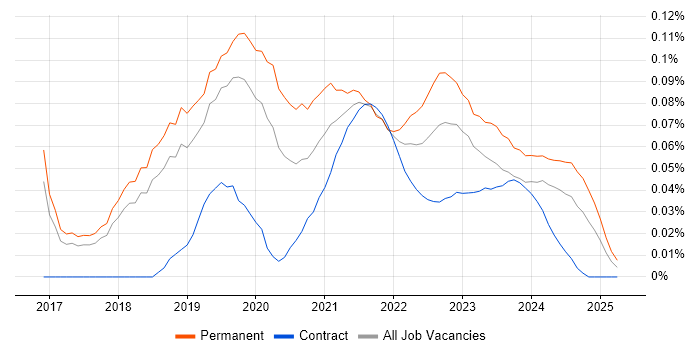
Historical trend showing the proportion of permanent IT job postings featuring 'Azure Software Engineer' in the job title and offering remote or hybrid work options relative to all permanent IT jobs advertised.

Azure Software Engineer job vacancy trend for remote/hybrid roles

Azure Software Engineer
Salary Trend for Remote/Hybrid Jobs

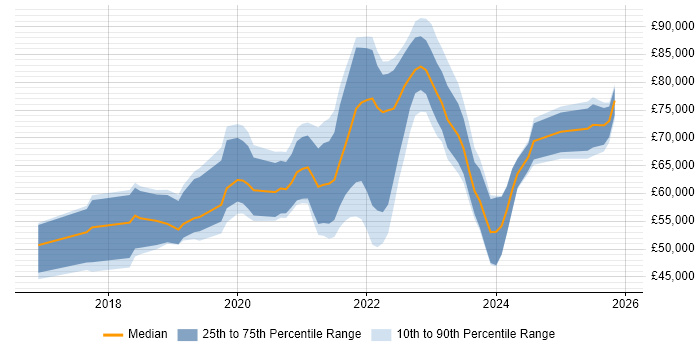
Salary distribution trend for remote Azure Software Engineer job vacancies.

Salary distribution trend for remote Azure Software Engineer job vacancies

Azure Software Engineer
Salary Histogram for Remote/Hybrid Jobs

Salary distribution for jobs with remote/hybrid work options citing Azure Software Engineer over the 6 months to 21 December 2025.

Azure Software Engineer salary histogram for jobs with remote/hybrid work options

Azure Software Engineer Skill Set
Top 30 Co-Occurring Skills & Capabilities in Remote/Hybrid Jobs

For the 6 months to 21 December 2025, Azure Software Engineer job roles required the following skills and capabilities in order of popularity. The figures indicate the absolute number of co-occurrences and as a proportion of all permanent jobs with hybrid/remote work options featuring Azure Software Engineer in the job title.

1 9 (100.00%) Azure
1 9 (100.00%) Software Engineering
2 8 (88.89%) .NET
3 7 (77.78%) DevOps
4 6 (66.67%) C#
5 5 (55.56%) .NET Core
5 5 (55.56%) CI/CD
5 5 (55.56%) Full-Stack Development
5 5 (55.56%) SaaS
6 4 (44.44%) AngularJS
6 4 (44.44%) Azure DevOps
6 4 (44.44%) SQL Server
7 3 (33.33%) Containerisation
7 3 (33.33%) Docker
7 3 (33.33%) JavaScript
7 3 (33.33%) Kubernetes
7 3 (33.33%) Microsoft
7 3 (33.33%) SDLC
7 3 (33.33%) SQL
8 2 (22.22%) Agile
8 2 (22.22%) ASP.NET
8 2 (22.22%) Continuous Improvement
8 2 (22.22%) CSS
8 2 (22.22%) HTML
8 2 (22.22%) HTML5
8 2 (22.22%) MVC
8 2 (22.22%) React
8 2 (22.22%) RESTful
9 1 (11.11%) .NET Framework
9 1 (11.11%) AI

Azure Software Engineer Skill Set
Co-Occurring Skills & Capabilities in Remote/Hybrid Jobs by Category

The following tables expand on the one above by listing co-occurrences grouped by category. They cover the same employment type, locality and period, with up to 20 co-occurrences shown in each category:

Cloud Services
1 9 (100.00%) Azure
2 5 (55.56%) SaaS
3 4 (44.44%) Azure DevOps
4 1 (11.11%) Azure Logic Apps
4 1 (11.11%) Azure Pipelines
4 1 (11.11%) Cloud Computing
4 1 (11.11%) Serverless
Database & Business Intelligence
1 4 (44.44%) SQL Server
2 1 (11.11%) RDBMS
2 1 (11.11%) Relational Database
Development Applications
1 1 (11.11%) Git
General
1 1 (11.11%) Digital Health
1 1 (11.11%) Finance
1 1 (11.11%) Public Sector
1 1 (11.11%) Retail
Libraries, Frameworks & Software Standards
1 8 (88.89%) .NET
2 5 (55.56%) .NET Core
3 4 (44.44%) AngularJS
4 2 (22.22%) ASP.NET
4 2 (22.22%) CSS
4 2 (22.22%) HTML
4 2 (22.22%) HTML5
4 2 (22.22%) React
4 2 (22.22%) RESTful
5 1 (11.11%) .NET Framework
5 1 (11.11%) ASP.NET Core
5 1 (11.11%) ASP.NET Web API
5 1 (11.11%) Blazor
5 1 (11.11%) Bootstrap
5 1 (11.11%) Entity Framework
5 1 (11.11%) REST
5 1 (11.11%) Sass
Miscellaneous
1 1 (11.11%) Cloud Native
Processes & Methodologies
1 9 (100.00%) Software Engineering
2 7 (77.78%) DevOps
3 5 (55.56%) CI/CD
3 5 (55.56%) Full-Stack Development
4 3 (33.33%) Containerisation
4 3 (33.33%) SDLC
5 2 (22.22%) Agile
5 2 (22.22%) Continuous Improvement
5 2 (22.22%) MVC
6 1 (11.11%) AI
6 1 (11.11%) API Design
6 1 (11.11%) Mobile First
6 1 (11.11%) MVVM
6 1 (11.11%) OO
6 1 (11.11%) OOP
6 1 (11.11%) Pair Programming
6 1 (11.11%) Service Delivery
6 1 (11.11%) SOA
6 1 (11.11%) Stakeholder Management
6 1 (11.11%) TDD
Programming Languages
1 6 (66.67%) C#
2 3 (33.33%) JavaScript
2 3 (33.33%) SQL
3 1 (11.11%) Python
3 1 (11.11%) TypeScript
Qualifications
1 1 (11.11%) Degree
1 1 (11.11%) SC Cleared
1 1 (11.11%) Security Cleared
Quality Assurance & Compliance
1 1 (11.11%) QA
System Software
1 3 (33.33%) Docker
Systems Management
1 3 (33.33%) Kubernetes
Vendors
1 3 (33.33%) Microsoft