
Hybrid/Remote .NET Framework Job Trends

Microsoft .NET Framework
UK > Work from Home

The table below provides summary statistics and salary benchmarking for remote or hybrid work requiring .NET Framework skills. It covers permanent job vacancies from the 6 months leading up to 9 January 2026, with comparisons to the same periods in the previous two years.

6 months to
9 Jan 2026
Same period 2025 Same period 2024
Rank 250 144 108
Rank change year-on-year -106 -36 +9
Permanent jobs citing .NET Framework 113 375 615
As % of all permanent jobs with remote/hybrid work options 0.75% 2.28% 2.90%
As % of the Libraries, Frameworks & Software Standards category 4.21% 7.42% 9.40%
Number of salaries quoted 107 265 579
10th Percentile £40,698 £31,750 £40,000
25th Percentile £48,750 £43,750 £45,625
Median annual salary (50th Percentile) £60,000 £57,500 £57,500
Median % change year-on-year +4.35% - +0.88%
75th Percentile £80,000 £67,500 £72,500
90th Percentile £90,000 £80,000 £81,250
UK median annual salary £60,000 £55,000 £60,000
% change year-on-year +9.09% -8.33% +4.35%

All Software Libraries and Frameworks
Work from Home

.NET Framework falls under the Software Libraries and Frameworks category. For comparison with the information above, the following table provides summary statistics for all permanent job vacancies with remote or hybrid options requiring technical specification, industry standards, software libraries and framework skills.

Permanent vacancies with a requirement for technical specification, industry standards, software libraries and framework skills 2,683 5,054 6,542
As % of all permanent jobs with a WFH option 17.77% 30.69% 30.87%
Number of salaries quoted 2,094 3,225 5,598
10th Percentile £40,000 £41,250 £41,227
25th Percentile £50,875 £51,250 £50,000
Median annual salary (50th Percentile) £65,641 £67,500 £65,000
Median % change year-on-year -2.75% +3.85% -
75th Percentile £85,000 £85,000 £82,500
90th Percentile £110,000 £108,750 £100,000
UK median annual salary £65,000 £65,000 £65,000
% change year-on-year - - -3.70%

.NET Framework
Job Vacancy Trend for Remote/Hybrid Jobs

Historical trend showing the proportion of permanent IT job postings citing .NET Framework and offering remote or hybrid work options relative to all permanent IT jobs advertised.
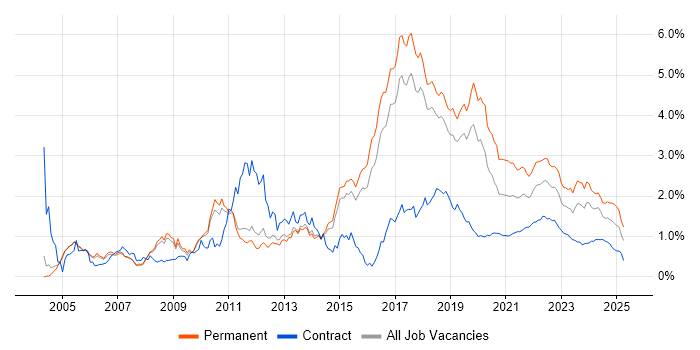
.NET Framework job vacancy trend for remote/hybrid jobs

.NET Framework
Salary Trend for Remote/Hybrid Jobs

Salary distribution trend for jobs with remote/hybrid work options citing .NET Framework.
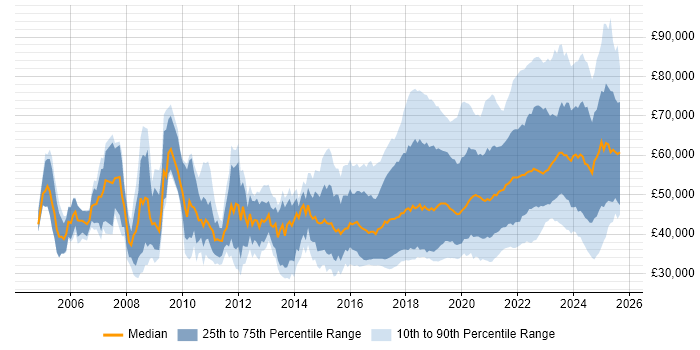
Salary distribution trend for jobs with remote/hybrid work options citing .NET Framework

.NET Framework
Salary Histogram for Remote/Hybrid Jobs

Salary distribution for jobs with remote/hybrid work options citing .NET Framework over the 6 months to 9 January 2026.

.NET Framework salary histogram for jobs with remote/hybrid work options

.NET Framework
Co-Occurring Skills & Capabilities in Remote/Hybrid Jobs by Category

The following tables expand on the one above by listing co-occurrences grouped by category. They cover the same employment type, locality and period, with up to 20 co-occurrences shown in each category:

Application Platforms
1 6 (5.31%) IIS
2 3 (2.65%) SharePoint
3 2 (1.77%) CMS
3 2 (1.77%) Confluence
3 2 (1.77%) nginx
3 2 (1.77%) Umbraco
Cloud Services
1 90 (79.65%) Azure
2 40 (35.40%) Azure DevOps
3 26 (23.01%) AWS
4 25 (22.12%) GitHub
5 23 (20.35%) Entra ID
5 23 (20.35%) Serverless
6 20 (17.70%) SaaS
7 17 (15.04%) Azure App Service
8 16 (14.16%) GitHub Actions
9 15 (13.27%) PaaS
10 8 (7.08%) GCP
11 7 (6.19%) Azure AKS
12 6 (5.31%) Azure Logic Apps
12 6 (5.31%) Azure Service Bus
13 5 (4.42%) Azure Functions
14 4 (3.54%) Azure Key Vault
14 4 (3.54%) Power Platform
15 3 (2.65%) Azure Event Grid
15 3 (2.65%) Dynamics 365
15 3 (2.65%) Power Automate
Communications & Networking
1 4 (3.54%) Internet
2 2 (1.77%) DNS
2 2 (1.77%) Intranet
3 1 (0.88%) DHCP
3 1 (0.88%) HTTP
3 1 (0.88%) TCP/IP
Database & Business Intelligence
1 47 (41.59%) SQL Server
2 23 (20.35%) NoSQL
3 20 (17.70%) MongoDB
4 19 (16.81%) Azure SQL Database
5 18 (15.93%) Elasticsearch
6 10 (8.85%) SQL Server Reporting Services
7 8 (7.08%) PostgreSQL
8 6 (5.31%) MySQL
8 6 (5.31%) Relational Database
9 4 (3.54%) SQL Server Integration Services
10 3 (2.65%) Power BI
11 2 (1.77%) PostHog
11 2 (1.77%) Redis
12 1 (0.88%) Tableau
Development Applications
1 23 (20.35%) Git
2 3 (2.65%) JIRA
3 2 (1.77%) Jenkins
3 2 (1.77%) NUnit
3 2 (1.77%) Storybook
3 2 (1.77%) TeamCity
3 2 (1.77%) Visual Studio
4 1 (0.88%) MSTest
4 1 (0.88%) Sourcetree
4 1 (0.88%) Team Foundation Server
General
1 31 (27.43%) Social Skills
2 13 (11.50%) Finance
3 11 (9.73%) Public Sector
4 8 (7.08%) Inclusion and Diversity
5 5 (4.42%) Analytical Skills
5 5 (4.42%) Law
6 2 (1.77%) Documentation Skills
6 2 (1.77%) Legal
6 2 (1.77%) Retail
7 1 (0.88%) Back Office
7 1 (0.88%) Banking
7 1 (0.88%) Games
Job Titles
1 90 (79.65%) Developer
2 44 (38.94%) .NET Developer
3 29 (25.66%) Senior
4 28 (24.78%) Software Developer
5 20 (17.70%) Lead
5 20 (17.70%) Senior Developer
6 15 (13.27%) Azure Developer
6 15 (13.27%) Lead Developer
7 14 (12.39%) C# Developer
8 13 (11.50%) Lead .NET Developer
9 12 (10.62%) SaaS Developer
10 11 (9.73%) Senior Software Developer
11 10 (8.85%) Software Engineer
12 7 (6.19%) Applications Developer
12 7 (6.19%) Full-Stack Developer
13 5 (4.42%) IT Engineer
13 5 (4.42%) IT Support
13 5 (4.42%) Senior Software Engineer
13 5 (4.42%) Support Engineer
13 5 (4.42%) Technical Developer
Libraries, Frameworks & Software Standards
1 113 (100.00%) .NET
2 59 (52.21%) Entity Framework
3 53 (46.90%) React
4 41 (36.28%) .NET Core
5 37 (32.74%) ASP.NET Web API
6 35 (30.97%) AngularJS
7 34 (30.09%) ASP.NET
8 28 (24.78%) RESTful
9 22 (19.47%) ASP.NET MVC
10 20 (17.70%) Node.js
11 19 (16.81%) Razor View Engine
11 19 (16.81%) Vue
12 16 (14.16%) Blazor
13 15 (13.27%) ASP.NET Web Forms
13 15 (13.27%) CSS
14 12 (10.62%) HTML
14 12 (10.62%) REST
15 9 (7.96%) WPF
16 7 (6.19%) jQuery
16 7 (6.19%) Web Services
Miscellaneous
1 13 (11.50%) Cloud Native
2 4 (3.54%) Onboarding
3 3 (2.65%) Virtual Team
4 2 (1.77%) Greenfield Project
4 2 (1.77%) IoT
4 2 (1.77%) Legacy Systems
5 1 (0.88%) Analytical Mindset
5 1 (0.88%) Data Centre
5 1 (0.88%) Distributed Systems
5 1 (0.88%) Enterprise Software
5 1 (0.88%) Legacy Applications
5 1 (0.88%) Legacy Code
5 1 (0.88%) Mobile App
5 1 (0.88%) Reinsurance
Operating Systems
1 15 (13.27%) Windows
2 2 (1.77%) Linux
3 1 (0.88%) VMS
Processes & Methodologies
1 76 (67.26%) Agile
2 56 (49.56%) DevOps
3 51 (45.13%) CI/CD
3 51 (45.13%) Full-Stack Development
4 50 (44.25%) Microservices
5 42 (37.17%) Scrum
6 39 (34.51%) MVC
7 35 (30.97%) Problem-Solving
8 31 (27.43%) Clean Code
8 31 (27.43%) Kanban
9 27 (23.89%) Computer Science
9 27 (23.89%) Mentoring
10 24 (21.24%) Continuous Improvement
10 24 (21.24%) TDD
11 23 (20.35%) Software Engineering
12 21 (18.58%) Design Patterns
13 19 (16.81%) B2B
13 19 (16.81%) Code Quality
13 19 (16.81%) Front End Development
13 19 (16.81%) Test Automation
Programming Languages
1 82 (72.57%) C#
2 71 (62.83%) SQL
3 42 (37.17%) JavaScript
3 42 (37.17%) TypeScript
4 8 (7.08%) T-SQL
5 3 (2.65%) Python
5 3 (2.65%) VB.NET
6 2 (1.77%) PowerShell
6 2 (1.77%) XAML
7 1 (0.88%) Bicep
Qualifications
1 30 (26.55%) Degree
2 26 (23.01%) Computer Science Degree
3 17 (15.04%) Master's Degree
4 6 (5.31%) Security Cleared
5 5 (4.42%) SC Cleared
6 3 (2.65%) DBS Check
7 2 (1.77%) BPSS Clearance
8 1 (0.88%) Microsoft Certification
Quality Assurance & Compliance
1 15 (13.27%) QA
2 4 (3.54%) Accessibility
3 2 (1.77%) WCAG
4 1 (0.88%) GDPR
4 1 (0.88%) ISO/IEC 27001
4 1 (0.88%) SOC 2
System Software
1 18 (15.93%) Active Directory
2 7 (6.19%) Docker
Systems Management
1 12 (10.62%) Kubernetes
2 4 (3.54%) Terraform
3 2 (1.77%) Grafana
Vendors
1 50 (44.25%) Microsoft
2 7 (6.19%) Syncfusion
2 7 (6.19%) Telerik
3 6 (5.31%) Google
4 5 (4.42%) Sage
4 5 (4.42%) Xamarin
4 5 (4.42%) Zoho
5 3 (2.65%) DevExpress
6 1 (0.88%) Foundry
6 1 (0.88%) Infragistics
6 1 (0.88%) IONA
6 1 (0.88%) Perforce