Machine Learning Engineer Job Trends in England

Machine Learning Engineer
UK > England

The median Machine Learning Engineer salary in England is £65,000 per year, according to job vacancies posted during the 6 months leading to 13 October 2026.

The table below compares current salary benchmarking and summary statistics with the previous two years.

6 months to
13 Oct 2026
Same period 2025 Same period 2024
Rank 684 582 658
Rank change year-on-year -102 +76 +3
Permanent jobs requiring a Machine Learning Engineer 78 43 64
As % of all permanent jobs in England 0.075% 0.10% 0.10%
As % of the Job Titles category 0.081% 0.11% 0.11%
Number of salaries quoted 40 17 58
10th Percentile - £65,750 £53,375
25th Percentile £48,750 £68,000 £65,938
Median annual salary (50th Percentile) £65,000 £85,000 £92,500
Median % change year-on-year -23.53% -8.11% +32.14%
75th Percentile £90,000 £102,500 £93,750
90th Percentile £101,000 £124,750 -
UK median annual salary £65,000 £85,000 £87,500
% change year-on-year -23.53% -2.86% +25.00%

All Permanent IT Job Roles
England

For comparison with the information above, the following table provides summary statistics for all permanent IT job vacancies in England. Most job vacancies include a discernible job title that can be normalized. As such, the figures in the second row provide an indication of the number of permanent jobs in our overall sample.

Permanent vacancies in England with a recognized job title 96,394 38,710 60,932
% of permanent jobs with a recognized job title 92.58% 90.53% 95.23%
Number of salaries quoted 67,344 23,101 34,738
10th Percentile £30,250 £28,000 £31,250
25th Percentile £41,250 £35,750 £41,250
Median annual salary (50th Percentile) £59,522 £55,000 £56,500
Median % change year-on-year +8.22% -2.65% -5.83%
75th Percentile £77,500 £75,000 £75,000
90th Percentile £100,000 £95,000 £95,000
UK median annual salary £58,750 £53,500 £55,000
% change year-on-year +9.81% -2.73% -8.33%

Machine Learning Engineer
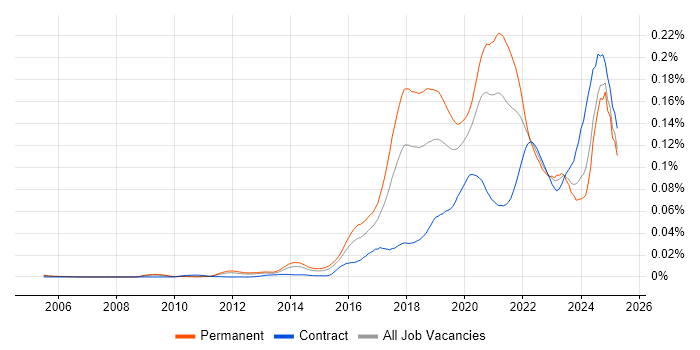
Job Vacancy Trend in England

Historical trend showing the proportion of permanent IT job postings featuring 'Machine Learning Engineer' in the job title relative to all permanent IT jobs advertised in England.

Machine Learning Engineer job vacancy trend in England

Machine Learning Engineer
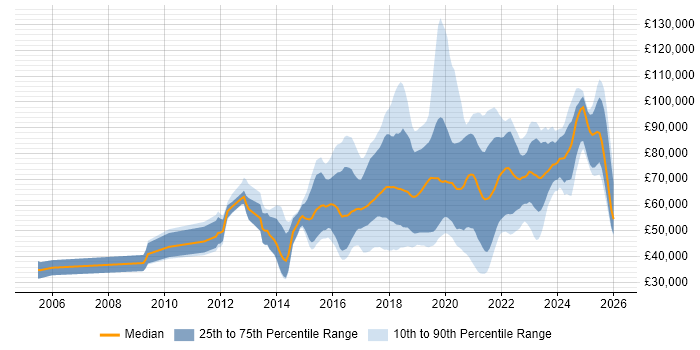
Salary Trend in England

Salary distribution trend for Machine Learning Engineer job vacancies in England.

Salary distribution trend for Machine Learning Engineer job vacancies in England

Machine Learning Engineer
Salary Histogram in England

Salary distribution for jobs citing Machine Learning Engineer in England over the 6 months to 13 October 2026.

Salary histogram for Machine Learning Engineer in England

Machine Learning Engineer
Job Locations in England

The table below looks at the demand and provides a guide to the median salaries quoted in IT jobs citing Machine Learning Engineer within the England region over the 6 months to 13 October 2026. The 'Rank Change' column provides an indication of the change in demand within each location based on the same 6 month period last year.

Location Rank Change
on Same Period
Last Year
Matching
Permanent
IT Job Ads
Median Salary
Past 6 Months
Median Salary
% Change
on Same Period
Last Year
Live
Jobs
London -25 45 £52,500 -41.67% 128
North of England -48 25 £65,000 -8.45% 16
North West -20 17 £65,000 -5.45% 13
North East -63 7 £65,000 -
East of England -35 4 £100,000 - 19
South West -72 3 £82,500 -2.94% 10
Yorkshire -37 1 £65,000 -8.45% 3
South East -46 1 - - 15
Machine Learning Engineer
UK

Machine Learning Engineer Skill Set
Top 30 Co-Occurring Skills & Capabilities in England

For the 6 months to 13 October 2026, Machine Learning Engineer job roles required the following skills and capabilities in order of popularity. The figures indicate the absolute number of co-occurrences and as a proportion of all permanent job ads across the England region featuring Machine Learning Engineer in the job title.

1 78 (100.00%) Machine Learning
2 51 (65.38%) Python
3 48 (61.54%) AI
4 40 (51.28%) MLOps
5 36 (46.15%) CI/CD
6 33 (42.31%) Data Science
6 33 (42.31%) Software Engineering
7 32 (41.03%) Azure
8 30 (38.46%) Data Pipeline
9 26 (33.33%) AWS
10 24 (30.77%) PyTorch
11 20 (25.64%) TensorFlow
12 18 (23.08%) Analytics
12 18 (23.08%) Collaborative Working
12 18 (23.08%) Roadmaps
13 17 (21.79%) GCP
13 17 (21.79%) Technical Leadership
13 17 (21.79%) Test Automation
13 17 (21.79%) Use Case
14 16 (20.51%) Deployment Automation
15 15 (19.23%) Actionable Insight
15 15 (19.23%) Architectural Design
15 15 (19.23%) Community of Practice
15 15 (19.23%) Continuous Improvement
15 15 (19.23%) Generative AI
15 15 (19.23%) IT Strategy
15 15 (19.23%) LangChain
15 15 (19.23%) LangGraph
15 15 (19.23%) Low Latency
15 15 (19.23%) Quality Management

Machine Learning Engineer Skill Set
Co-Occurring Skills & Capabilities in England by Category

The following tables expand on the one above by listing co-occurrences grouped by category. They cover the same employment type, locality and period, with up to 20 co-occurrences shown in each category:

Application Platforms
1 2 (2.56%) Apache Spark
2 1 (1.28%) Apache Airflow
Cloud Services
1 32 (41.03%) Azure
2 26 (33.33%) AWS
3 17 (21.79%) GCP
4 14 (17.95%) Azure Data Factory
4 14 (17.95%) Azure DevOps
4 14 (17.95%) Azure Machine Learning
4 14 (17.95%) Power Platform
5 3 (3.85%) SaaS
6 1 (1.28%) Prefect
Database & Business Intelligence
1 14 (17.95%) Power BI
2 1 (1.28%) Apache Arrow
2 1 (1.28%) Apache Iceberg
2 1 (1.28%) Metadata
2 1 (1.28%) Parquet
Development Applications
1 2 (2.56%) Git
1 2 (2.56%) MLflow
General
1 42 (53.85%) Finance
2 17 (21.79%) Social Skills
3 12 (15.38%) Banking
4 3 (3.85%) Analytical Skills
5 1 (1.28%) Aerospace
5 1 (1.28%) Automotive
5 1 (1.28%) Law
5 1 (1.28%) Public Sector
Libraries, Frameworks & Software Standards
1 24 (30.77%) PyTorch
2 20 (25.64%) TensorFlow
3 15 (19.23%) LangChain
3 15 (19.23%) LangGraph
3 15 (19.23%) scikit-learn
4 5 (6.41%) FastAPI
5 4 (5.13%) Flask
6 2 (2.56%) Gradio
6 2 (2.56%) Kafka
6 2 (2.56%) ONNX
6 2 (2.56%) OpenCV
6 2 (2.56%) Streamlit
6 2 (2.56%) Terraform
7 1 (1.28%) Google JAX
7 1 (1.28%) Hugging Face
7 1 (1.28%) JAX
7 1 (1.28%) Model Context Protocol
7 1 (1.28%) Plotly
7 1 (1.28%) Ray
7 1 (1.28%) React
Miscellaneous
1 16 (20.51%) Product Ownership
2 15 (19.23%) Cloud Native
3 5 (6.41%) Algorithms
4 3 (3.85%) Embedded Systems
5 1 (1.28%) AI Agents
5 1 (1.28%) Distributed Computing
5 1 (1.28%) Distributed Systems
5 1 (1.28%) IoT
5 1 (1.28%) Legacy Systems
Operating Systems
1 3 (3.85%) Linux
Processes & Methodologies
1 78 (100.00%) Machine Learning
2 48 (61.54%) AI
3 40 (51.28%) MLOps
4 36 (46.15%) CI/CD
5 33 (42.31%) Data Science
5 33 (42.31%) Software Engineering
6 30 (38.46%) Data Pipeline
7 18 (23.08%) Analytics
7 18 (23.08%) Collaborative Working
7 18 (23.08%) Roadmaps
8 17 (21.79%) Technical Leadership
8 17 (21.79%) Test Automation
8 17 (21.79%) Use Case
9 16 (20.51%) Deployment Automation
10 15 (19.23%) Actionable Insight
10 15 (19.23%) Architectural Design
10 15 (19.23%) Community of Practice
10 15 (19.23%) Continuous Improvement
10 15 (19.23%) IT Strategy
10 15 (19.23%) Technical Debt
Programming Languages
1 51 (65.38%) Python
2 15 (19.23%) SQL
3 4 (5.13%) C++
4 3 (3.85%) C
5 1 (1.28%) Java
Qualifications
1 5 (6.41%) Degree
1 5 (6.41%) SC Cleared
1 5 (6.41%) Security Cleared
2 3 (3.85%) Computer Science Degree
3 2 (2.56%) DV Cleared
4 1 (1.28%) Master's Degree
4 1 (1.28%) PhD
Quality Assurance & Compliance
1 14 (17.95%) Data Quality
System Software
1 6 (7.69%) Docker
Systems Management
1 1 (1.28%) Kubeflow
1 1 (1.28%) Kubernetes
Vendors
1 14 (17.95%) Databricks
2 1 (1.28%) Foundry