
Hybrid/Remote Vulnerability Remediation Job Trends

Vulnerability Remediation
UK > Work from Home

The table below provides summary statistics and salary benchmarking for remote or hybrid work requiring Vulnerability Remediation skills. It covers permanent job vacancies from the 6 months leading up to 14 January 2026, with comparisons to the same periods in the previous two years.

6 months to
14 Jan 2026
Same period 2025 Same period 2024
Rank 345 364 451
Rank change year-on-year +19 +87 +198
Permanent jobs citing Vulnerability Remediation 29 77 38
As % of all permanent jobs with remote/hybrid work options 0.19% 0.47% 0.18%
As % of the Processes & Methodologies category 0.22% 0.50% 0.19%
Number of salaries quoted 21 52 35
10th Percentile £51,000 - -
25th Percentile £51,250 £42,500 -
Median annual salary (50th Percentile) £70,000 £50,000 £47,000
Median % change year-on-year +40.00% +6.38% -25.98%
75th Percentile £75,000 £83,688 £61,875
90th Percentile £90,000 £88,375 £75,000
UK median annual salary £70,000 £57,500 £57,500
% change year-on-year +21.74% - -11.54%

All Process & Methodology Skills
Work from Home

Vulnerability Remediation falls under the Processes and Methodologies category. For comparison with the information above, the following table provides summary statistics for all permanent job vacancies with remote or hybrid options requiring process or methodology skills.

Permanent vacancies with a requirement for process or methodology skills 13,245 15,409 20,193
As % of all permanent jobs with a WFH option 87.44% 93.79% 93.51%
Number of salaries quoted 8,423 9,065 16,344
10th Percentile £30,000 £36,250 £36,250
25th Percentile £41,781 £47,000 £45,000
Median annual salary (50th Percentile) £60,000 £62,500 £60,000
Median % change year-on-year -4.00% +4.17% -4.00%
75th Percentile £80,000 £82,500 £78,750
90th Percentile £100,000 £100,000 £97,500
UK median annual salary £55,000 £60,000 £60,000
% change year-on-year -8.33% - -4.00%

Vulnerability Remediation
Job Vacancy Trend for Remote/Hybrid Jobs

Historical trend showing the proportion of permanent IT job postings citing Vulnerability Remediation and offering remote or hybrid work options relative to all permanent IT jobs advertised.
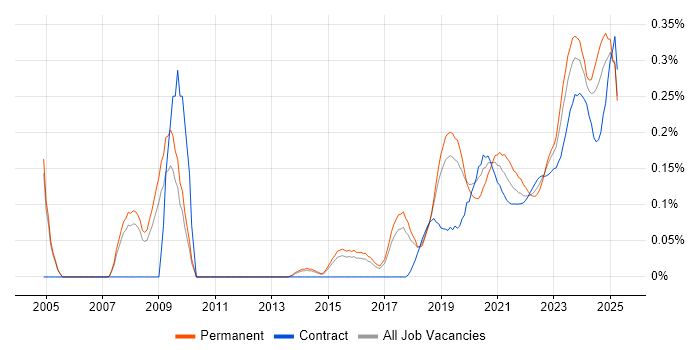
Vulnerability Remediation job vacancy trend for remote/hybrid jobs

Vulnerability Remediation
Salary Trend for Remote/Hybrid Jobs

Salary distribution trend for jobs with remote/hybrid work options citing Vulnerability Remediation.
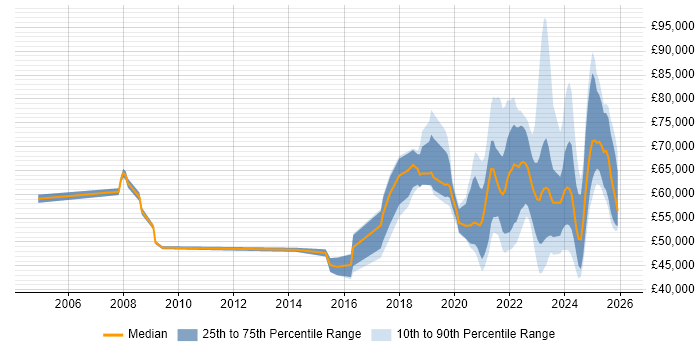
Salary distribution trend for jobs with remote/hybrid work options citing Vulnerability Remediation

Vulnerability Remediation
Salary Histogram for Remote/Hybrid Jobs

Salary distribution for jobs with remote/hybrid work options citing Vulnerability Remediation over the 6 months to 14 January 2026.

Vulnerability Remediation salary histogram for jobs with remote/hybrid work options

Vulnerability Remediation
Co-Occurring Skills & Capabilities in Remote/Hybrid Jobs by Category

The following tables expand on the one above by listing co-occurrences grouped by category. They cover the same employment type, locality and period, with up to 20 co-occurrences shown in each category:

Cloud Services
1 11 (37.93%) Azure
2 6 (20.69%) Entra ID
3 5 (17.24%) Azure Sentinel
4 4 (13.79%) Microsoft 365
5 3 (10.34%) Mimecast
5 3 (10.34%) Power Platform
5 3 (10.34%) Tessian
6 2 (6.90%) AWS CloudFormation
6 2 (6.90%) Dynamics 365
6 2 (6.90%) IaaS
6 2 (6.90%) Microsoft Purview
6 2 (6.90%) PaaS
6 2 (6.90%) PowerApps
Communications & Networking
1 6 (20.69%) VPN
1 6 (20.69%) Wireshark
2 5 (17.24%) Firewall
3 2 (6.90%) SSL
4 1 (3.45%) Broadband
4 1 (3.45%) DNS
4 1 (3.45%) HTTP
4 1 (3.45%) Intrusion Detection
4 1 (3.45%) SSH
4 1 (3.45%) TCP/IP
Database & Business Intelligence
1 2 (6.90%) SQL Server
2 1 (3.45%) Power BI
Development Applications
1 1 (3.45%) JIRA
General
1 15 (51.72%) Social Skills
2 8 (27.59%) Finance
3 6 (20.69%) Analytical Skills
4 5 (17.24%) Inclusion and Diversity
5 3 (10.34%) Documentation Skills
6 2 (6.90%) Aviation
6 2 (6.90%) Banking
6 2 (6.90%) Financial Institution
6 2 (6.90%) Retail
Job Titles
1 10 (34.48%) Analyst
1 10 (34.48%) Security Analyst
2 7 (24.14%) Cybersecurity Analyst
2 7 (24.14%) Senior
3 5 (17.24%) Security Engineer
4 4 (13.79%) Cybersecurity Engineer
4 4 (13.79%) Forensic Manager
4 4 (13.79%) Incident Manager
5 3 (10.34%) Azure Engineer
5 3 (10.34%) Cloud Engineer
5 3 (10.34%) Lead
5 3 (10.34%) Senior Analyst
5 3 (10.34%) Senior Security Analyst
6 2 (6.90%) Cybersecurity Specialist
6 2 (6.90%) Wintel Analyst
7 1 (3.45%) Cyber Threat Manager
7 1 (3.45%) Information Security Engineer
7 1 (3.45%) Operations Engineer
7 1 (3.45%) Platform Engineer
7 1 (3.45%) Senior Cybersecurity Analyst
Libraries, Frameworks & Software Standards
1 2 (6.90%) ARM Templates
2 1 (3.45%) Software Packaging
Miscellaneous
1 14 (48.28%) Security Posture
2 8 (27.59%) Cyber Threat
3 6 (20.69%) Cyber Kill Chain
4 4 (13.79%) Security Operations Centre
5 3 (10.34%) Cloud Native
5 3 (10.34%) Distributed Denial-of-Service
5 3 (10.34%) Management Information System
6 2 (6.90%) Cyber Defence
6 2 (6.90%) Cyber Security Posture
6 2 (6.90%) Hybrid Cloud
6 2 (6.90%) Onboarding
7 1 (3.45%) Cyberattack
7 1 (3.45%) Data Centre
7 1 (3.45%) Enterprise Software
7 1 (3.45%) Product Ownership
Operating Systems
1 10 (34.48%) Windows
2 7 (24.14%) Linux
3 6 (20.69%) Unix
4 3 (10.34%) Windows Server
5 2 (6.90%) VMS
Processes & Methodologies
1 21 (72.41%) Incident Response
2 19 (65.52%) Cybersecurity
3 15 (51.72%) Security Operations
3 15 (51.72%) SIEM
3 15 (51.72%) Vulnerability Management
4 9 (31.03%) Cloud Security
4 9 (31.03%) Data Loss Prevention
5 8 (27.59%) Information Security
5 8 (27.59%) Threat Detection
6 7 (24.14%) Cyber Threat Intelligence
6 7 (24.14%) MITRE ATT&CK
6 7 (24.14%) Threat Intelligence
7 6 (20.69%) Continuous Improvement
7 6 (20.69%) Root Cause Analysis
7 6 (20.69%) Security Monitoring
7 6 (20.69%) Threat Modelling
7 6 (20.69%) Use Case
8 5 (17.24%) DevOps
8 5 (17.24%) Problem-Solving
8 5 (17.24%) Remediation Plan
Programming Languages
1 5 (17.24%) PowerShell
2 2 (6.90%) Bicep
2 2 (6.90%) Python
Qualifications
1 9 (31.03%) CISSP
2 6 (20.69%) Degree
2 6 (20.69%) GCFA
2 6 (20.69%) GCIA
2 6 (20.69%) GCIH
3 4 (13.79%) Computer Science Degree
4 3 (10.34%) CISM
4 3 (10.34%) CompTIA Security+
4 3 (10.34%) Microsoft Certification
5 2 (6.90%) CEH
6 1 (3.45%) Azure Certification
6 1 (3.45%) CompTIA CySA+
6 1 (3.45%) GSEC
6 1 (3.45%) Master's Degree
6 1 (3.45%) OSCP
6 1 (3.45%) Security Cleared
6 1 (3.45%) SSCP
Quality Assurance & Compliance
1 16 (55.17%) NIST
2 5 (17.24%) ISO/IEC 27001
3 2 (6.90%) COBIT
3 2 (6.90%) GDPR
3 2 (6.90%) GRC
3 2 (6.90%) PCI DSS
4 1 (3.45%) Cyber Essentials
4 1 (3.45%) ISO/IEC 27002 (supersedes ISO/IEC 17799)
4 1 (3.45%) NIST 800
System Software
1 6 (20.69%) VMware Infrastructure
2 3 (10.34%) Active Directory
3 2 (6.90%) Docker
3 2 (6.90%) Hyper-V
3 2 (6.90%) Virtual Machines
Systems Management
1 4 (13.79%) Single Sign-On
2 3 (10.34%) Nessus
3 2 (6.90%) Kubernetes
3 2 (6.90%) Microsoft Intune
3 2 (6.90%) SCCM
3 2 (6.90%) Suricata
3 2 (6.90%) Terraform
4 1 (3.45%) Nmap
Vendors
1 11 (37.93%) Microsoft
2 6 (20.69%) VMware
3 3 (10.34%) CrowdStrike
3 3 (10.34%) Palo Alto
3 3 (10.34%) Tenable
4 1 (3.45%) AlienVault
4 1 (3.45%) LogRhythm
4 1 (3.45%) Qualys
4 1 (3.45%) Splunk