
Full-Stack Software Engineer
UK
The median Full-Stack Software Engineer salary in the UK is £65,000 per year, according to job vacancies posted during the 6 months leading to 2 May 2025.
The table below provides salary benchmarking and summary statistics, comparing them to the same period in the previous two years.
| 6 months to 2 May 2025 |
Same period 2024 | Same period 2023 | |
|---|---|---|---|
| Rank | 609 | 467 | 740 |
| Rank change year-on-year | -142 | +273 | -127 |
| Permanent jobs requiring a Full-Stack Software Engineer | 82 | 502 | 248 |
| As % of all permanent jobs advertised in the UK | 0.16% | 0.51% | 0.24% |
| As % of the Job Titles category | 0.17% | 0.54% | 0.26% |
| Number of salaries quoted | 73 | 157 | 140 |
| 10th Percentile | £42,750 | £42,500 | £52,028 |
| 25th Percentile | £57,189 | £47,500 | £57,188 |
| Median annual salary (50th Percentile) | £65,000 | £65,000 | £80,000 |
| Median % change year-on-year | - | -18.75% | +6.67% |
| 75th Percentile | £85,253 | £113,750 | £100,000 |
| 90th Percentile | £102,500 | £125,000 | £120,000 |
| UK excluding London median annual salary | £62,500 | £55,000 | £62,500 |
| % change year-on-year | +13.64% | -12.00% | +13.64% |
All Permanent IT Job Vacancies
UK
For comparison with the information above, the following table provides summary statistics for all permanent IT job vacancies. Most job vacancies include a discernible job title that can be normalized. As such, the figures in the second row provide an indication of the number of permanent jobs in our overall sample.
| Permanent vacancies in the UK with a recognized job title | 46,967 | 93,227 | 95,240 |
| % of permanent jobs with a recognized job title | 90.30% | 94.63% | 91.55% |
| Number of salaries quoted | 27,330 | 66,890 | 59,886 |
| 10th Percentile | £30,000 | £28,500 | £32,500 |
| 25th Percentile | £42,000 | £38,500 | £45,000 |
| Median annual salary (50th Percentile) | £57,500 | £52,900 | £60,000 |
| Median % change year-on-year | +8.70% | -11.83% | - |
| 75th Percentile | £75,000 | £71,250 | £81,250 |
| 90th Percentile | £97,500 | £90,000 | £100,000 |
| UK excluding London median annual salary | £52,000 | £50,000 | £52,500 |
| % change year-on-year | +4.00% | -4.76% | +5.00% |
Full-Stack Software Engineer
Job Vacancy Trend
Job postings that featured Full-Stack Software Engineer in the job title as a proportion of all IT jobs advertised.
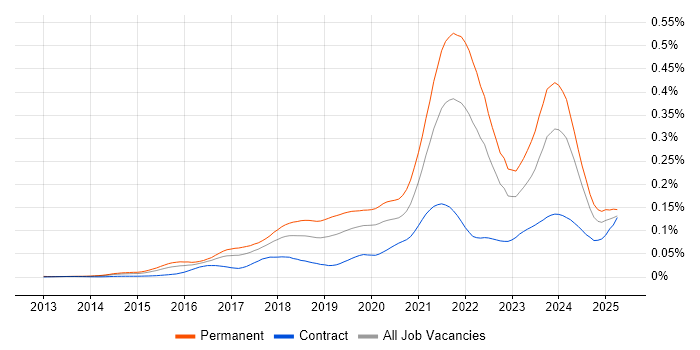
Full-Stack Software Engineer
Salary Trend
3-month moving average salary quoted in jobs citing Full-Stack Software Engineer.
Full-Stack Software Engineer
Salary Histogram
Salary distribution for jobs citing Full-Stack Software Engineer over the 6 months to 2 May 2025.
Full-Stack Software Engineer
Top 14 Job Locations
The table below looks at the demand and provides a guide to the median salaries quoted in IT jobs citing Full-Stack Software Engineer within the UK over the 6 months to 2 May 2025. The 'Rank Change' column provides an indication of the change in demand within each location based on the same 6 month period last year.
| Location | Rank Change on Same Period Last Year |
Matching Permanent IT Job Ads |
Median Salary Past 6 Months |
Median Salary % Change on Same Period Last Year |
Live Jobs |
|---|---|---|---|---|---|
| England | +99 | 76 | £65,000 | -16.13% | 162 |
| UK excluding London | -100 | 56 | £62,500 | +13.64% | 82 |
| Work from Home | +148 | 42 | £67,500 | +5.88% | 116 |
| London | +66 | 25 | £93,750 | -14.77% | 102 |
| South West | +129 | 17 | £61,250 | +22.50% | 9 |
| South East | +102 | 14 | £65,000 | +8.33% | 26 |
| North of England | +76 | 12 | £45,000 | -14.29% | 27 |
| Yorkshire | +74 | 6 | £45,000 | - | 5 |
| North West | +7 | 6 | £52,500 | -6.67% | 21 |
| Midlands | +55 | 5 | £52,500 | -12.50% | 10 |
| Scotland | -69 | 5 | £79,569 | +44.67% | 1 |
| West Midlands | +46 | 4 | £52,500 | -12.50% | 5 |
| East of England | +53 | 3 | £60,000 | +23.71% | 12 |
| East Midlands | +48 | 1 | - | - | 5 |
Full-Stack Software Engineer Skill Set
Top 30 Co-occurring Skills and Capabilities
For the 6 months to 2 May 2025, Full-Stack Software Engineer job roles required the following skills and capabilities in order of popularity. The figures indicate the absolute number co-occurrences and as a proportion of all permanent job ads featuring Full-Stack Software Engineer in the job title.
|
|
Full-Stack Software Engineer Skill Set
Co-occurring Skills and Capabilities by Category
The follow tables expand on the table above by listing co-occurrences grouped by category. The same employment type, locality and period is covered with up to 20 co-occurrences shown in each of the following categories:
|
|
|||||||||||||||||||||||||||||||||||||||||||||||||||||||||||||||||||||||||||||||||||||||||||||||||||||||||||||||
|
|
|||||||||||||||||||||||||||||||||||||||||||||||||||||||||||||||||||||||||||||||||||||||||||||||||||||||||||||||
|
|
|||||||||||||||||||||||||||||||||||||||||||||||||||||||||||||||||||||||||||||||||||||||||||||||||||||||||||||||
|
|
|||||||||||||||||||||||||||||||||||||||||||||||||||||||||||||||||||||||||||||||||||||||||||||||||||||||||||||||
|
|
|||||||||||||||||||||||||||||||||||||||||||||||||||||||||||||||||||||||||||||||||||||||||||||||||||||||||||||||
|
|
|||||||||||||||||||||||||||||||||||||||||||||||||||||||||||||||||||||||||||||||||||||||||||||||||||||||||||||||
|
|
|||||||||||||||||||||||||||||||||||||||||||||||||||||||||||||||||||||||||||||||||||||||||||||||||||||||||||||||
|
|
|||||||||||||||||||||||||||||||||||||||||||||||||||||||||||||||||||||||||||||||||||||||||||||||||||||||||||||||